……………………………………………………
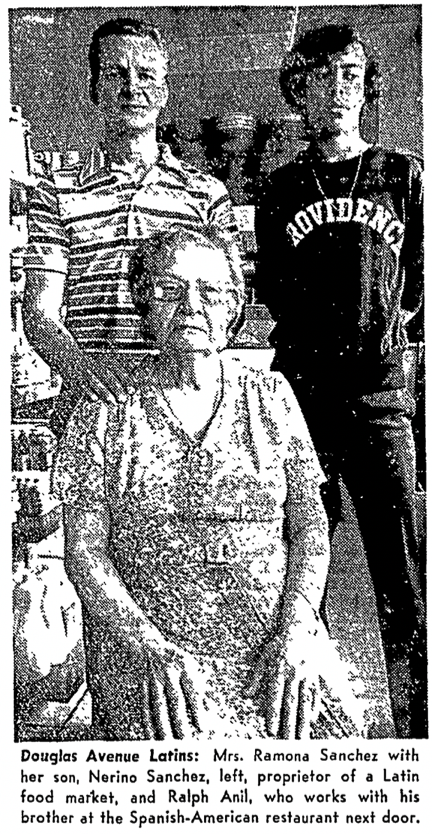
The photo above of the Sánchez family appeared in the Providence Evening Bulletin on July 23, 1973 | The store they managed was called The International Market and it was at 129 Douglas Avenue in Providence. It the became the second Latino-owned market in Rhode Island
The photo above of the Sánchez family appeared in the Providence Evening Bulletin on July 23, 1973 | The store they managed was called The International Market and it was at 129 Douglas Avenue in Providence. It the became the second Latino-owned market in Rhode Island
I came to Rhode Island from Cuba in 1969 with almost nothing in my pocket. Like many others, I came looking for work and for a chance to begin again. In Cuba, life had become difficult. There was too much control, too much rationing, and no room to build the kind of future I wanted for myself or for the family I hoped to raise. So I came to Providence, where I already had family, and started the only way I knew how—by working.
At first, I worked long and hard hours in a factory. Sometimes eighty hours a week. I did that for more than a year until finally in 1970, I saved enough and opened a small store on Douglas Avenue in Providence. It was not much, but it was mine. Later, I took over a little market there and built it into the kind of place our people needed.
Back then, that part of Douglas Avenue had become something of a meeting place for Spanish-speaking families. There were people from Puerto Rico, Santo Domingo, Cuba, and South America all living and working in that neighborhood. You could hear Spanish everywhere. There was a Spanish-American restaurant nearby, a club, small shops, and a market where people could find the foods they missed from home.
I wanted my store to be that place where people walked in looking for the things they could not find in the big American supermarkets. Things like plantains, Spanish-language comic books, tropical juices, canned goods from home, spices, oils, rice, beans, and all the small
At first, I worked long and hard hours in a factory. Sometimes eighty hours a week. I did that for more than a year until finally in 1970, I saved enough and opened a small store on Douglas Avenue in Providence. It was not much, but it was mine. Later, I took over a little market there and built it into the kind of place our people needed.
Back then, that part of Douglas Avenue had become something of a meeting place for Spanish-speaking families. There were people from Puerto Rico, Santo Domingo, Cuba, and South America all living and working in that neighborhood. You could hear Spanish everywhere. There was a Spanish-American restaurant nearby, a club, small shops, and a market where people could find the foods they missed from home.
I wanted my store to be that place where people walked in looking for the things they could not find in the big American supermarkets. Things like plantains, Spanish-language comic books, tropical juices, canned goods from home, spices, oils, rice, beans, and all the small
things that made life feel familiar. We carried foods from Ecuador, Colombia, Argentina, and Spain. We sold what people knew well and missed, and what reminded them where they came from.
It was never a fancy place. The aisles were so narrow that we had to stack boxes high because we did not have enough storage. Sometimes there were cartons everywhere because there was always stock coming in and never enough room to put it. But people came because they told me they felt it was theirs. They came because they could walk in and speak Spanish and they knew they did not have to explain themselves. They came because everything felt families the moment they walked through the door.
For many people, places like mine were more than just a store. They were where you heard news, where you asked for help, where you found out who had arrived, who was hiring, who needed a room, who had a cousin looking for work. People came for groceries, but they stayed to talk. After a while, customers did not feel like customers anymore, they felt like family.
My wife, Nerida, was there with me. She worked beside me, and together we built everything we had. My father also helped. My brother Ralph worked next door in the restaurant and often came back and forth between the two places. It was all family work, familia. We spent our days helping people find what they needed, sometimes translating, sometimes explaining, sometimes just listening.
We worked every day, even on Sundays and holidays. We opened in the morning and closed at night, and then we came back and did it all over again. I worked many years without a vacation, but I never thought much about that. My best interest was always my daughters. Everything I made, everything we earned, went to them. That was the reason for all of it.
My daughters grew up in that store, and when they were small, they helped us. They learned what work was like. But Nerida and I always wanted something more for them. We did not come here only to work hard, but so our daughters would have choices.
So, we gave them what we could. We put them in school, paid for piano lessons when they were little. We sent them to college and worked so they could study and become what they wanted.
All that was worth it because our daughter Lidia became a lawyer, the first Latina lawyer in Rhode Island. Our younger daughter, Vivian, went to medical school. To see that happen after all those years of work, after all those long days in the store, that is when you understand what sacrifice is for.
People look at a small market like ours and maybe they do not see very much. They see a tired storefront, crowded shelves, and people like us spending long hours behind a counter. But for me, that store was everything. It fed my family. It gave us our place in this city. It helped us build a future for our daughters. It gave people a place to feel at home.
I have always believed that if you work honestly and treat people well, they remember. That is what sustained us.
I thank God for that life. For my wife and my daughters. For the strength to work and for the chance to build something of my own.
This is my country now. And everything I built here, I built for them.
It was never a fancy place. The aisles were so narrow that we had to stack boxes high because we did not have enough storage. Sometimes there were cartons everywhere because there was always stock coming in and never enough room to put it. But people came because they told me they felt it was theirs. They came because they could walk in and speak Spanish and they knew they did not have to explain themselves. They came because everything felt families the moment they walked through the door.
For many people, places like mine were more than just a store. They were where you heard news, where you asked for help, where you found out who had arrived, who was hiring, who needed a room, who had a cousin looking for work. People came for groceries, but they stayed to talk. After a while, customers did not feel like customers anymore, they felt like family.
My wife, Nerida, was there with me. She worked beside me, and together we built everything we had. My father also helped. My brother Ralph worked next door in the restaurant and often came back and forth between the two places. It was all family work, familia. We spent our days helping people find what they needed, sometimes translating, sometimes explaining, sometimes just listening.
We worked every day, even on Sundays and holidays. We opened in the morning and closed at night, and then we came back and did it all over again. I worked many years without a vacation, but I never thought much about that. My best interest was always my daughters. Everything I made, everything we earned, went to them. That was the reason for all of it.
My daughters grew up in that store, and when they were small, they helped us. They learned what work was like. But Nerida and I always wanted something more for them. We did not come here only to work hard, but so our daughters would have choices.
So, we gave them what we could. We put them in school, paid for piano lessons when they were little. We sent them to college and worked so they could study and become what they wanted.
All that was worth it because our daughter Lidia became a lawyer, the first Latina lawyer in Rhode Island. Our younger daughter, Vivian, went to medical school. To see that happen after all those years of work, after all those long days in the store, that is when you understand what sacrifice is for.
People look at a small market like ours and maybe they do not see very much. They see a tired storefront, crowded shelves, and people like us spending long hours behind a counter. But for me, that store was everything. It fed my family. It gave us our place in this city. It helped us build a future for our daughters. It gave people a place to feel at home.
I have always believed that if you work honestly and treat people well, they remember. That is what sustained us.
I thank God for that life. For my wife and my daughters. For the strength to work and for the chance to build something of my own.
This is my country now. And everything I built here, I built for them.